Story details
COP31 Deadlock: Fossil Fuel Dispute Pushes Climate Summit Into Overtime
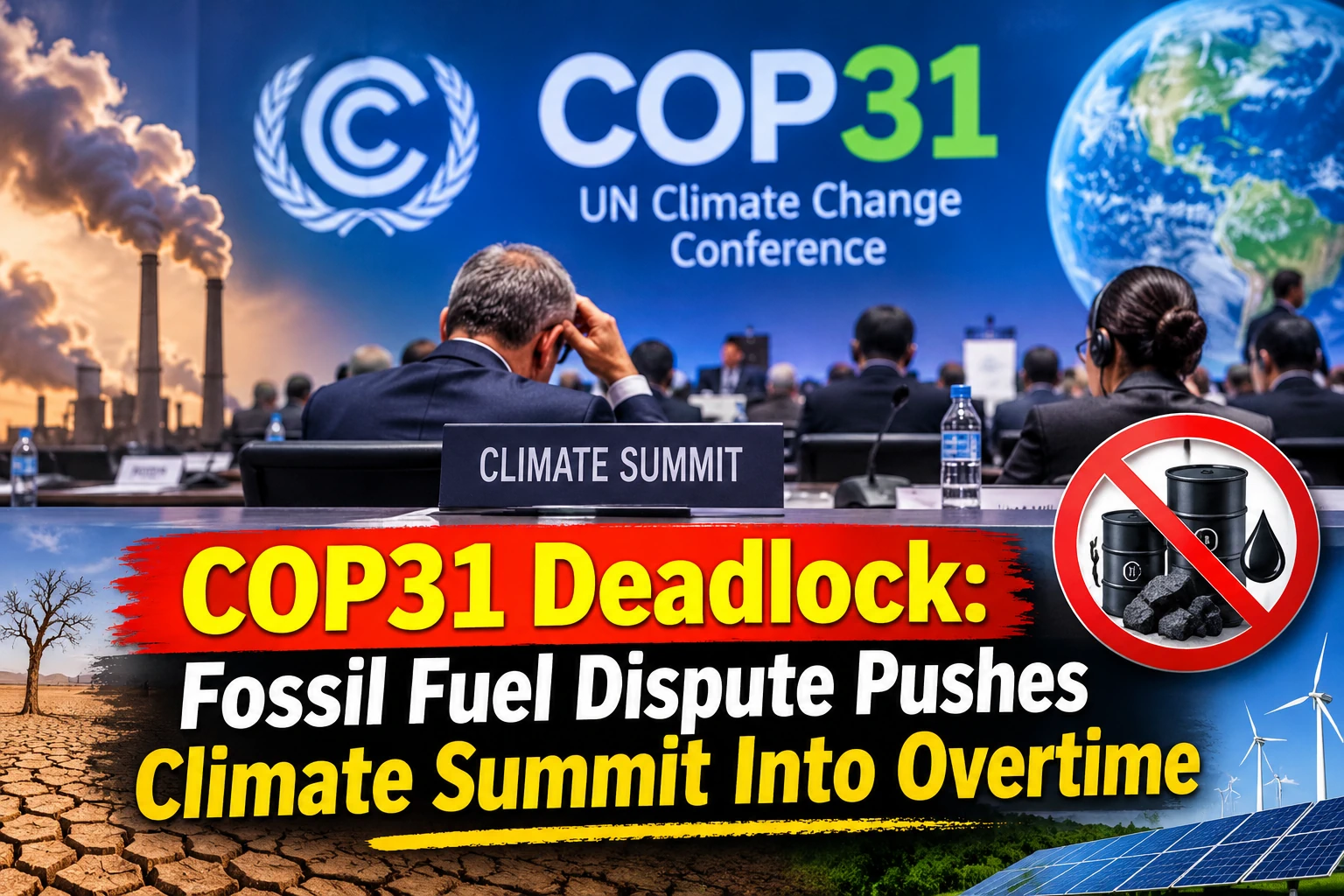
COP31 Deadlock: Fossil Fuel Dispute Pushes Climate Summit Into Overtime
World News | 21 November 2026
The 31st United Nations Climate Change Conference (COP31) has entered extra time after nearly 200 countries failed to reach an agreement on major climate issues. The two-week summit, held in Antalya, Türkiye, was scheduled to conclude on Friday, November 20, but negotiations continued beyond the deadline.
The biggest disagreement centres on the future of fossil fuels, including coal, oil and natural gas. These fuels are major sources of greenhouse gas emissions, which contribute to global warming and climate change.
Earlier in the week, Australia, a co-host and leading negotiator, presented a draft agreement calling for a faster phase-out of fossil fuels. However, a revised draft released on Thursday removed all references to fossil fuels following objections from Saudi Arabia and several other major oil and gas-producing countries.
The European Union strongly criticised the revised proposal, warning that the climate summit could turn into a "fossil summit" instead of delivering meaningful climate action. France, Panama and several other countries demanded that a clear commitment to move away from fossil fuels be restored to the final agreement.
Another major proposal under discussion is to increase the share of electricity in global final energy consumption to 35% by 2035. Türkiye and Australia support this electrification target as a way to reduce dependence on fossil fuels. However, some countries want a guarantee that the additional electricity will come from clean and renewable sources rather than coal or natural gas.
Climate finance has also become a major source of disagreement. Developing countries are demanding financial support from wealthy nations to deal with rising temperatures, floods, droughts and other climate-related disasters. A proposed target of $120 billion for climate adaptation support was removed from the revised draft, creating further disappointment among vulnerable nations.
African representatives have also expressed frustration, arguing that developing countries should not have to bear the financial burden of a climate crisis they contributed relatively little to creating.
The summit is taking place amid growing concerns about the Paris Agreement's target of limiting global warming to 1.5°C above pre-industrial levels. Recent United Nations assessments indicate that the world is on course to exceed this critical temperature threshold.
Environmental activists and climate-vulnerable countries fear that the absence of strong commitments on fossil fuels could weaken international climate action. Meanwhile, negotiators are continuing discussions in an attempt to produce a final agreement.
The outcome of COP31 could have significant implications for global energy policies, climate finance and the future of international efforts to combat global warming.
The central question remains: Can nearly 200 countries overcome their differences and agree on meaningful action to protect the planet?
Original source
This News item was curated by Sayzz from Sayzz News Room.