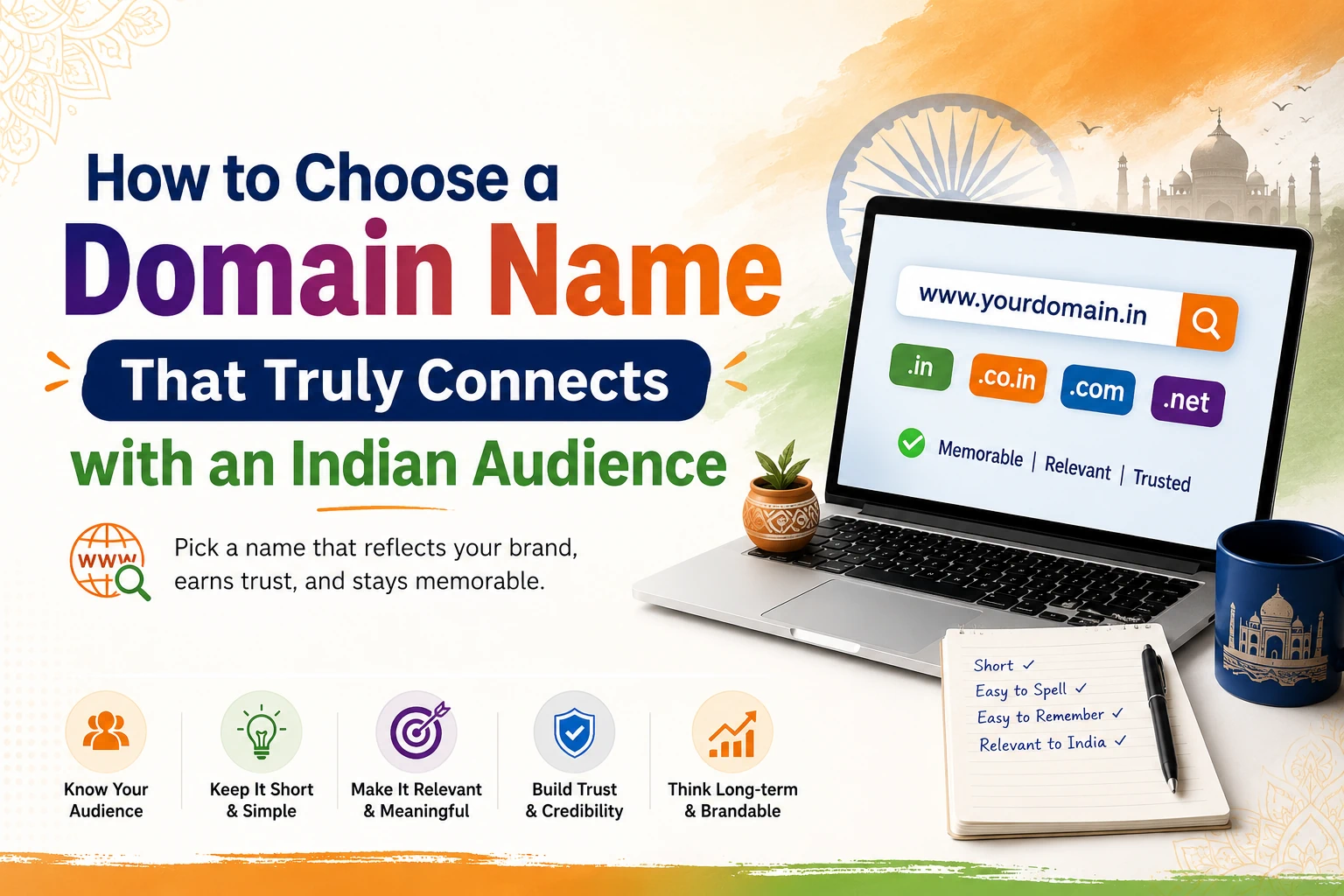
Your domain name is often the very first impression a visitor forms about your brand. For businesses targeting India, a market with 22+ official languages, hundreds of dialects, and a huge diversity of regional identities a generic, one-size-fits-all domain rarely works. Here's how to pick one that genuinely resonates.
1. Keep It Simple and Easy to Say Aloud
India has one of the highest rates of voice search and word-of-mouth referral in the world. A domain that's hard to pronounce or spell gets lost in conversation. Favor short, phonetic names that read the same way they sound avoid tricky consonant clusters or silent letters that confuse non-native English speakers.
2. Reflect Local Language and Culture Thoughtfully
You don't need to translate your brand name into Hindi or another regional language, but weaving in familiar words, sounds, or concepts can build instant warmth. Think of how brands like Swiggy, Zomato, or Paytm use short, punchy, quasi-Indian-sounding words that feel native without being literal translations. A name that echoes everyday vocabulary like food, family, trust, festivals often lands better than a purely English or Western-sounding one.
3. Consider the Right Domain Extension
While .com remains the gold standard for trust and recall, .in is a strong, India-specific alternative that instantly signals local relevance to both users and search engines. For hyperlocal or government-adjacent services, .co.in or niche extensions like .shop or .store can also work but always weigh recall value against localization value.
4. Avoid Culturally Loaded or Regionally Divisive Words
India's linguistic and cultural diversity means a word that's neutral in one state might carry different connotations in another. Steer clear of terms tied narrowly to one region, religion, or political sentiment unless that specificity is intentional and well-researched. When in doubt, test the name with people from different states.
5. Think Mobile-First
The majority of Indian internet users come online via smartphones, often typing on smaller keyboards or using voice assistants. Long domain names are painful to type and easy to mistype. Aim for domains under 12–15 characters where possible.
6. Check Trademark and Social Handle Availability
Before finalizing, search the Indian Trademark Registry and check availability of matching handles on Instagram, WhatsApp Business, and other platforms popular in India. Consistency across channels builds recognition and trust faster.
7. Build in Trust Signals
Indian consumers, especially in e-commerce and finance, are highly trust-conscious due to past experiences with scams. Words like "safe," "trust," "seva" (service), or "mitra" (friend) used tastefully can subtly increase perceived credibility. Avoid anything that sounds like a knockoff of an existing well-known brand.
8. Test for SEO and Search Intent
Run your shortlisted names through keyword research tools to see if they align with what Indian users are actually searching for. A domain that naturally includes a relevant keyword (without becoming a generic exact-match domain) can offer a small but meaningful SEO edge, especially for local and regional search queries.
Final Checklist Before You Buy
- Easy to pronounce and spell across major Indian languages
- Free of unintended meanings in other regional languages
- Available as
.comand/or.in - Under 15 characters
- Matching social handles available
- No trademark conflicts
- Feels trustworthy and locally relevant
A domain name isn't just a web address in India, it's often the first cultural handshake with your audience. Taking the extra time to test for language, tone, and trust will pay off in recall, credibility, and long-term brand loyalty.
Choose an image
Featured Article

For years, the default expectation after Class 12, especially for science students has been simple: clear JEE for engineering or clear NEET for medicine. If you didn't fit into those two boxes, it often felt like you were out of options. How to Choose the Right Path.
That narrative is completely outdated. Read More

What if the world's largest river wasn't on the ground?
When people think of the Amazon, they imagine a vast jungle filled with exotic wildlife, giant trees, and the mighty Amazon River. But scientists have discovered something even more astonishing hidden above the forest. A massive invisible rivers flowing through the sky. Read More
বৃক্ষছায়ায় জ্ঞানের আলোকবর্তিকা: প্রাচীন ভারতীয় শিক্ষা দর্শনের গূঢ়তত্ত্ব Read More

A brief overview of the village where Batukeshwar Dutt was born, its historical significance and how to visit. Read More

অনেক বছর ধরে প্রচলিত একটি ধারণা মানুষ তার মস্তিষ্কের মাত্র ১০% ব্যবহার করে। আধুনিক স্নায়ুবিজ্ঞান বলছে, এটি সম্পূর্ণ ভুল। আমরা আসলে আমাদের মস্তিষ্কের প্রায় সব অংশই ব্যবহার করি, শুধু একসঙ্গে নয়। প্রতিটি অঞ্চল নির্দিষ্ট কাজের জন্য দায়ী, কোনো অংশ ভাষা বোঝে, কোনো অংশ পরিকল্পনা করে, আবার অন্য অংশ আবেগ বা চলাফেরার নিয়ন্ত্রণে থাকে। Read More